
How it works
The programme
Twelve weeks, two short sessions a week, in the client’s own home. Delivered by your own care workers during their visits, guided by a tablet.
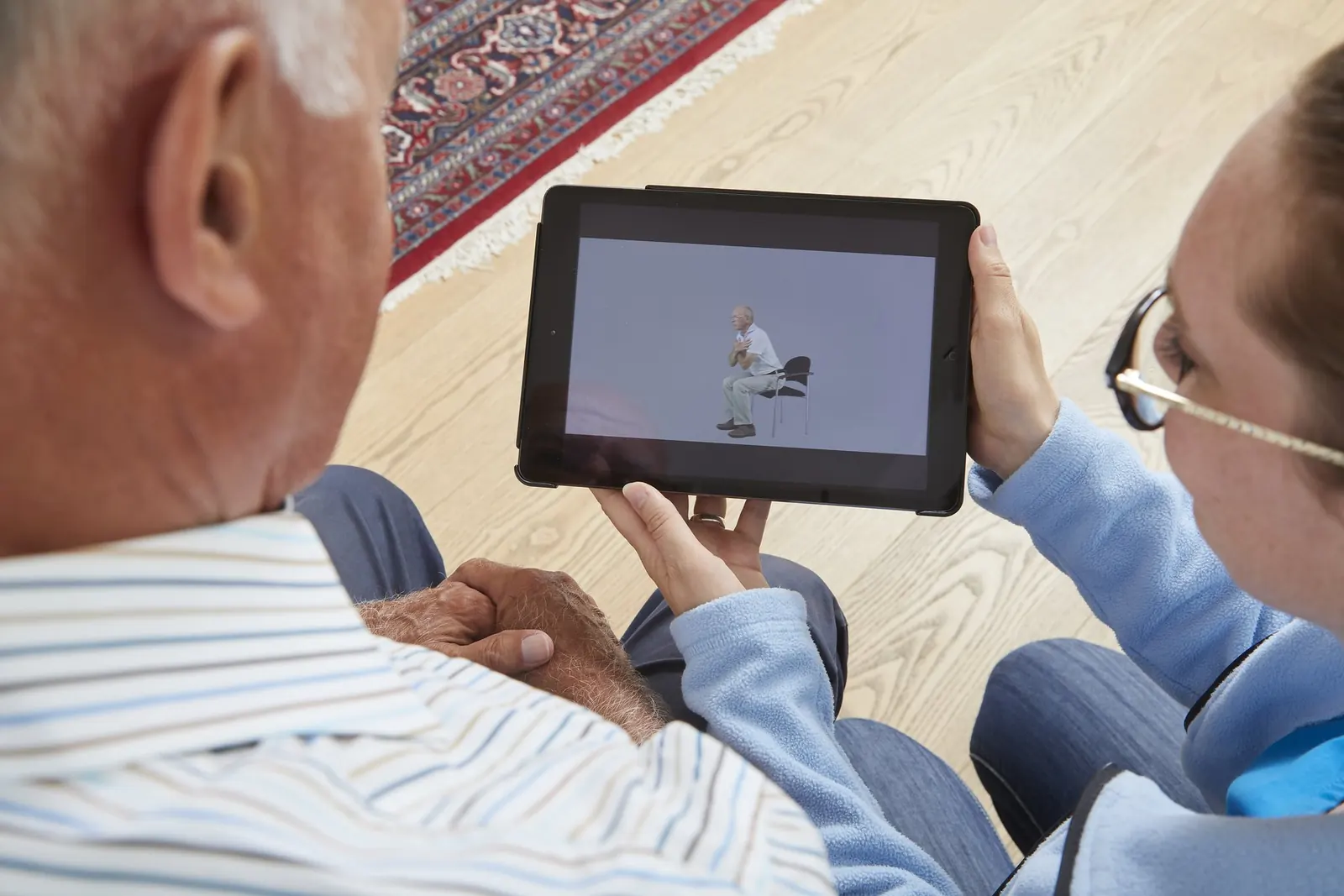
Screen, train, review
Screen
Ten standardised physical tests, including the 30-second chair stand, the Timed Up and Go and a four-metre walk, plus ten daily activities. Two scores: physical capacity and need for help.
Train
An individual programme built from the test results. Twice a week for twelve weeks, 20 to 30 minutes a session. Exercises step up as the client gets stronger.
Review
Re-screening every four weeks adjusts the programme. Afterwards a maintenance programme with fewer visits, in which relatives can take on a coaching role.
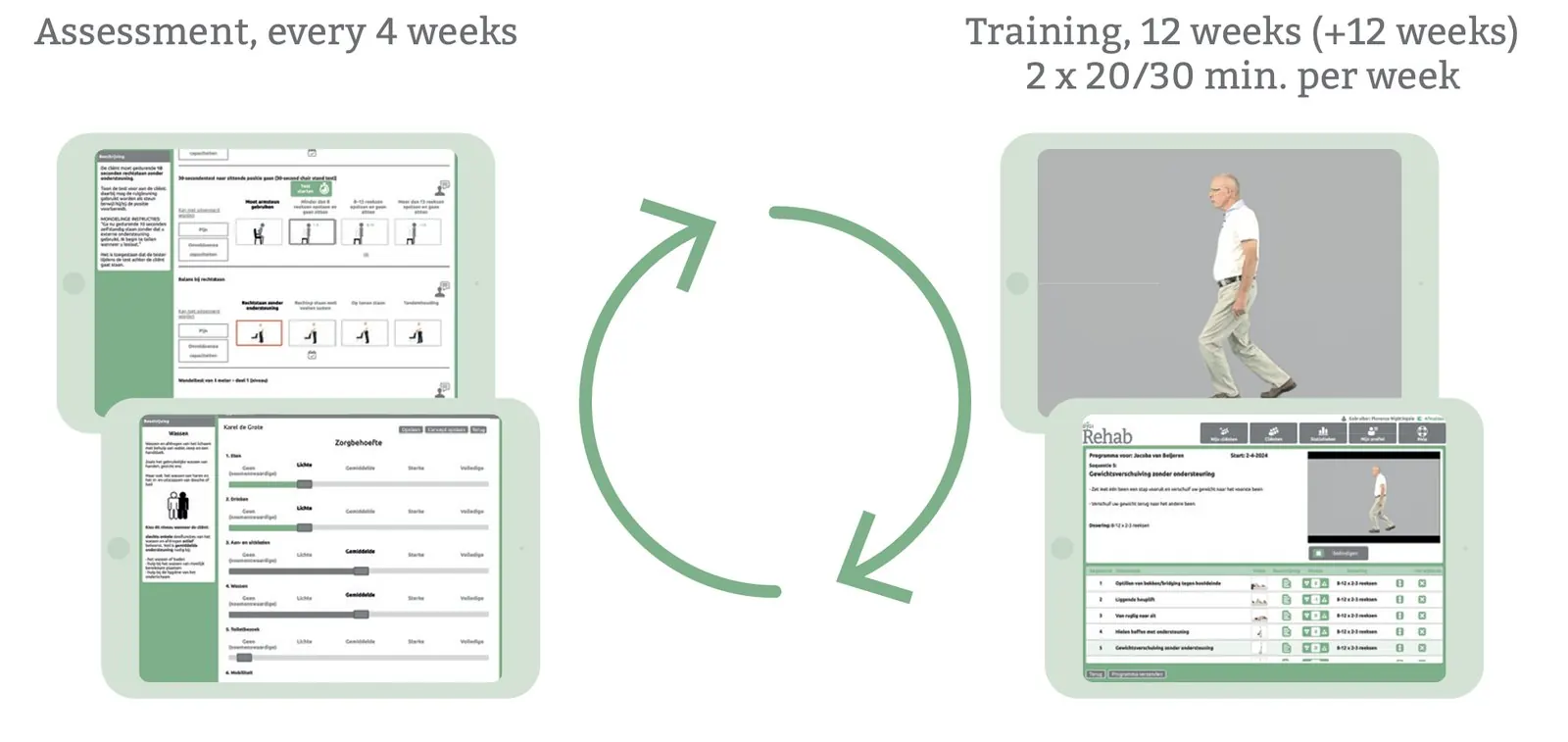
ACTIVE and REHAB
| Topic | ACTIVE | REHAB |
|---|---|---|
| For | Self-funding clients; people at the start of a new care package | Clients with an ongoing package whose needs are rising |
| Screening | ACTIVE screening: physical tests and questions about daily life | REHAB screening: physical tests and need for help in daily activities |
| Aim | Build strength before needs settle into a pattern | Reduce dependency and free up care hours |
| Main measure | Test results; time until more care is needed | Test results; care hours delivered |
Delivery
Care workers deliver the programme during their visits after a short training course (four hours in the Danish model). They do not need physiotherapy training. In the UK, delivery is overseen by a physiotherapist. The provider stays responsible for each client, as with any part of a care plan.
Training course: DigiRehab, The DigiRehab training solution: findings and potential, August 2024.
Within existing visits
No new profession needed
DigiRehab can be delivered within the visits a care worker already makes. The tablet supplies the tests, the programme and the record; the care worker supplies the relationship and the encouragement.
DigiRehab is not certified as a medical device. It does not diagnose or treat. Limitations and declarations